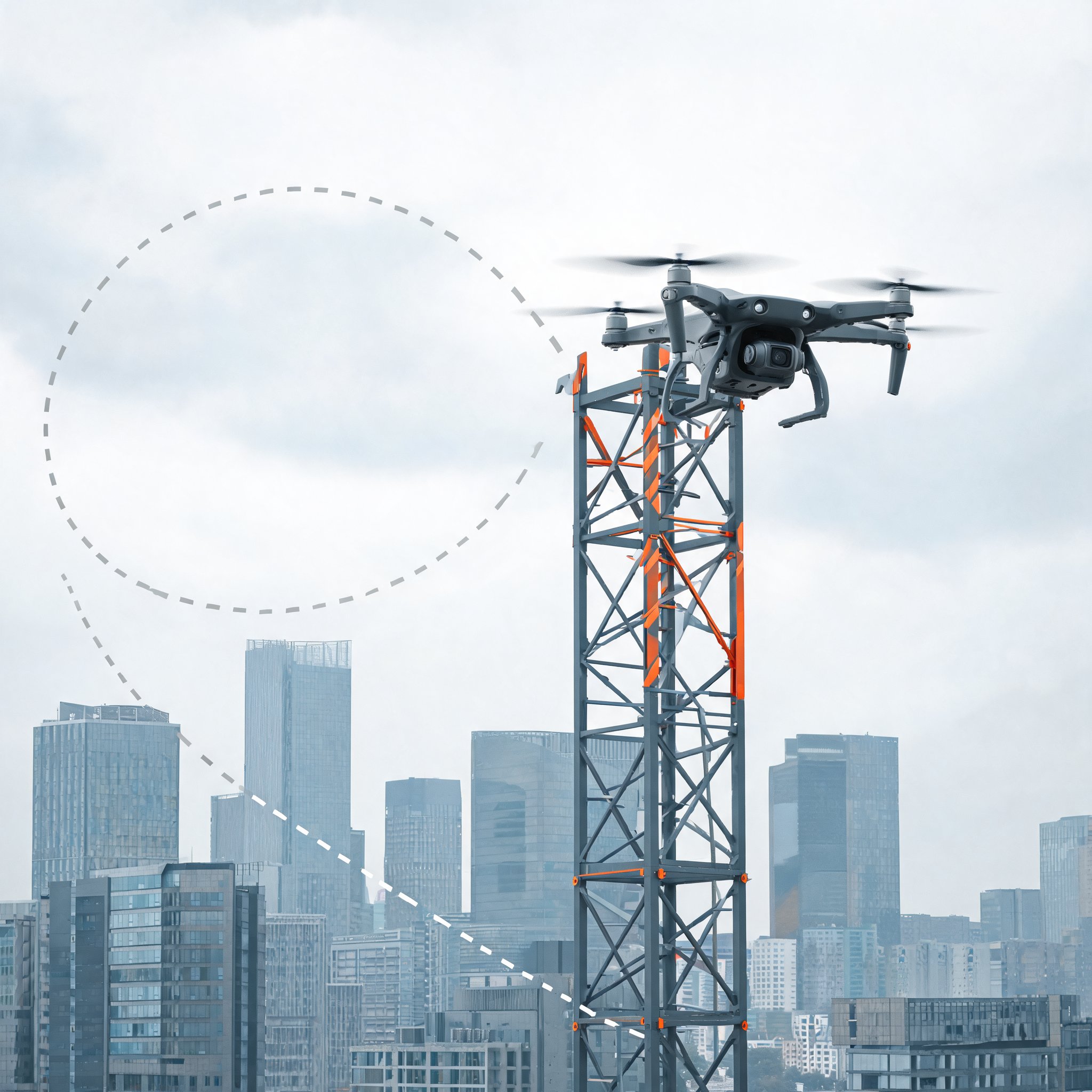
A surveying drone struck the top of a tower crane at a construction site in the Cheetham Hill area of Manchester in August, according to the Air Accidents Investigation Branch.
The AAIB said the unmanned aircraft was flying a pre-selected flight path to carry out an aerial survey over an urban construction site. Its obstacle avoidance feature was enabled, but the drone still hit the crane and fell 120 m to the ground.
The incident was notified to the AAIB, but no formal investigation was launched. The agency's bulletin did not identify the site or the contractor involved.
An internal investigation by the construction company found that the company and its remote pilots may not have fully understood the limitations of the obstacle avoidance software. The finding points to a gap between reliance on automated collision-avoidance and knowledge of how the system performs around complex structures.
The AAIB bulletin provides a concise account of the event rather than a determination of cause. It records the flight profile, the enabled safety feature and the subsequent fall, while the company's internal review addresses the operators' understanding of the software's limits.
The case highlights an operational issue for drone surveys near cranes and other tall site infrastructure: obstacle avoidance is an aid, not a guarantee. For construction teams, the incident underlines the need to match flight planning and pilot training to the actual capabilities and constraints of the equipment used.