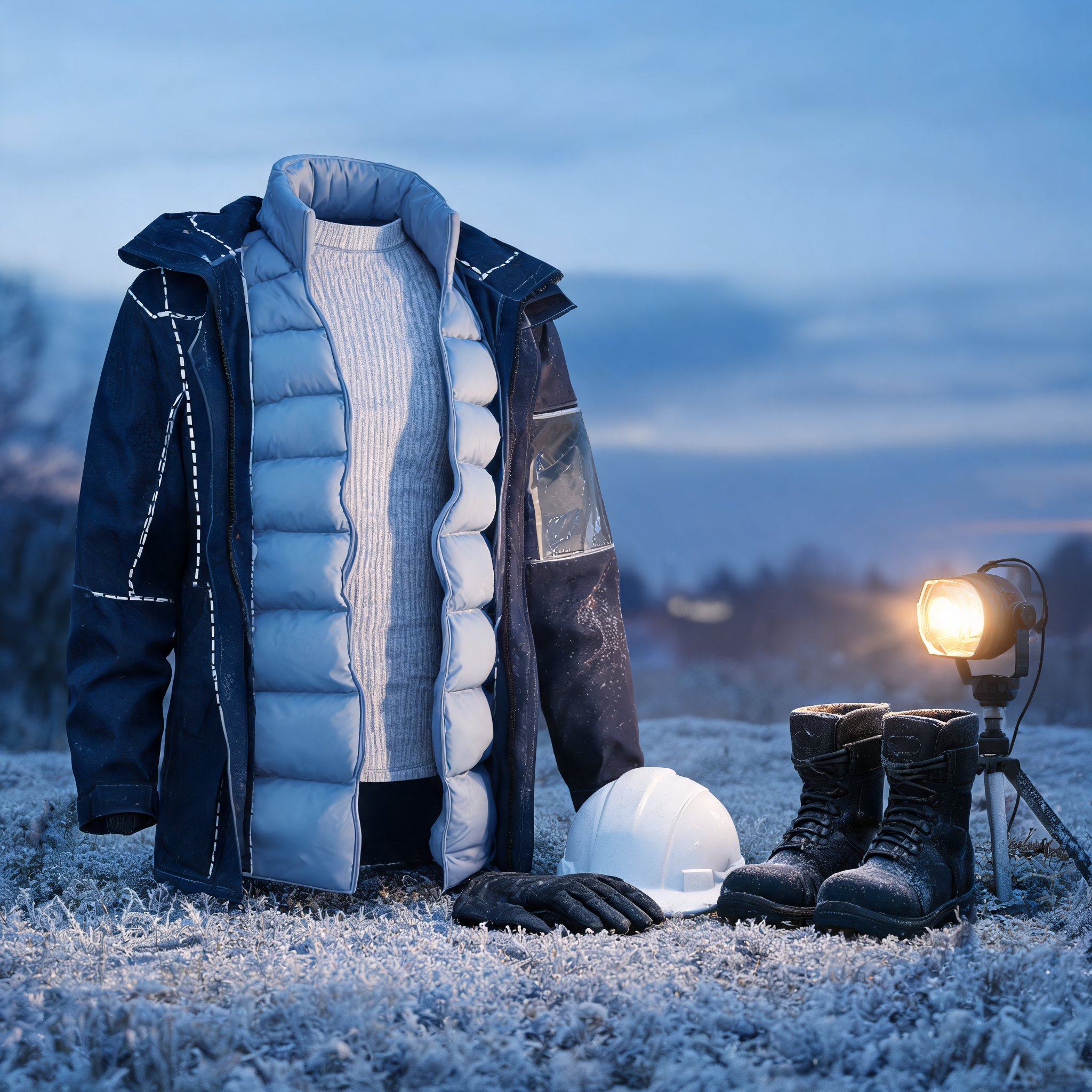
Outdoor assignments in winter raise the risk for employees when personal protective equipment is selected or combined incorrectly, according to guidance from CWS Workwear International GmbH in Dreieich, which names five typical protection gaps.
The company cites shorter days, wet conditions and frost as the factors that change the hazard situation at many outdoor workplaces — often without any matching adjustment to personal protective equipment (PPE).
Layer interaction as the weak point
Winter workwear is assembled from several layers, and according to the guide that is exactly where protection can fall short. Individual garments may be certified, yet the combination actually worn does not fulfil the requirements of the relevant standards. The guidance therefore treats the assembled outfit, not the single item, as the unit that decides whether winter protection holds.
For employers and wearers this shifts the practical question: whether the layers chosen for cold, wet and low-light conditions have been assessed together rather than one item at a time.
The five-gap list is framed as advice for reviewing winter PPE arrangements. It represents a provider's position rather than an independently verified finding, and the available material does not set out the five individual gaps, identify affected garment types or report test results for particular combinations.